Is AI coming for your job? The truth every Ghanaian worker should know

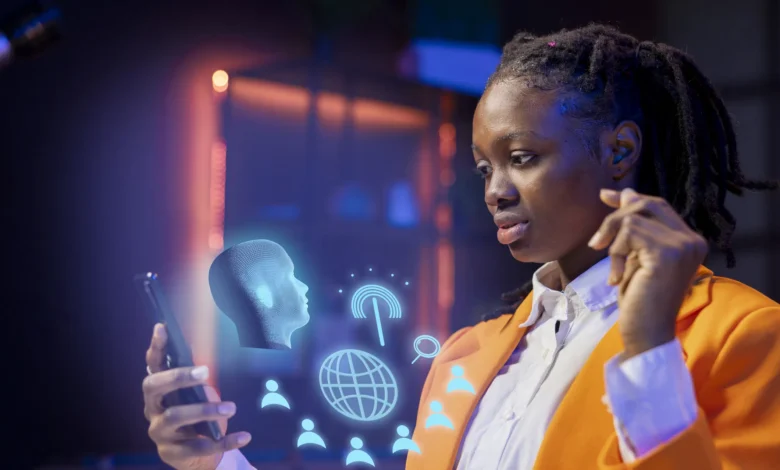
Artificial Intelligence is no longer something we only hear about in movies or tech conferences abroad. It is already here, and it is quietly changing how people work in Ghana.
From banks to media houses, from small businesses to government offices, AI tools are being used to write reports, analyse data, answer customer questions, design graphics, and even generate business ideas. Platforms like ChatGPT are now accessible to anyone with a smartphone and internet connection.
So the big question is this. Is AI coming for your job?
The honest answer is not as simple as yes or no. AI is changing jobs, but it is not automatically replacing everyone. What matters is how you respond.
What AI Is Already Doing in Ghana
AI is helping businesses automate repetitive tasks. Banks use intelligent systems to detect fraud and manage transactions. Media professionals use AI to draft content faster. Customer service teams use chatbots to respond to simple inquiries. Students use AI tools for research and study support.
Even small businesses in Accra and Kumasi now use AI powered tools for social media captions, logo design, bookkeeping, and customer communication.
This means some tasks that used to take hours now take minutes.
That is powerful. But it is also disruptive.
Jobs Most Likely to Be Affected
AI is strongest at handling repetitive, rule based, and data heavy tasks. Jobs that involve doing the same type of work every day without much creativity are more exposed.
Examples include basic data entry, simple bookkeeping, routine customer support, transcription, and basic content writing.
If your job mainly involves copying, pasting, typing information into systems, or answering the same questions daily, AI tools can now assist or partially automate those tasks.
However, this does not automatically mean job loss. It often means the job will change.
Jobs Less Likely to Disappear
AI struggles with emotional intelligence, human connection, leadership, physical labour, and complex decision making.
Professions that require strong human interaction such as teaching, nursing, counselling, sales negotiation, entrepreneurship, and skilled trades remain highly valuable.
Creative industries also continue to depend heavily on human originality. Even though AI can generate text and images, people still value authentic voices and cultural understanding, especially in Ghana where context and local relevance matter.
AI can assist these professionals, but it does not fully replace them.
The Real Threat Is Not AI
Here is the uncomfortable truth. AI is not the biggest threat. The real threat is refusing to adapt.
Workers who ignore technology and refuse to learn new skills are more vulnerable than those who embrace change.
Think about it this way. When computers became common, people who refused to learn basic computer skills struggled in the job market. Those who adapted became more competitive.
AI is similar. The workers who learn how to use AI tools effectively will likely outperform those who avoid them.
How Ghanaian Workers Can Stay Ahead
The smartest strategy is not to fight AI but to use it.
If you work in marketing, use AI to brainstorm campaign ideas and write first drafts faster.
If you are in finance, use AI tools to analyse data and improve efficiency.
If you are a student, use AI to understand difficult topics and improve productivity.
Learning digital skills is becoming essential. Skills such as data analysis, digital marketing, graphic design, coding, content creation, and AI tool usage are increasingly valuable.
Many of these skills can be learned online without a university degree. The internet has made access to knowledge easier than ever.
AI Will Create New Opportunities
While some roles may shrink, new opportunities are emerging.
There is growing demand for AI trainers, prompt engineers, digital marketers, content strategists, automation specialists, and tech savvy entrepreneurs.
Businesses in Ghana are beginning to seek workers who understand both their industry and technology.
For example, a real estate agent who uses AI to analyse market trends and write listings quickly has an advantage over one who does everything manually.
A small business owner who uses AI to automate customer responses saves time and scales faster.
The future rewards those who combine human skills with technology.
What About Government and Policy?
Regulation and oversight are important to ensure responsible use of AI. In Ghana, financial and digital systems operate under institutions like the Bank of Ghana when it comes to fintech and digital payments.
As AI adoption grows, policymakers and regulators will continue shaping how technology is integrated into workplaces.
But individual workers should not wait for policies to secure their future. Personal development is more urgent than policy debates.
Should You Be Worried?
Fear is natural when technology changes rapidly. But panic is not productive.
Instead of asking, “Will AI take my job?” ask, “How can I use AI to make myself more valuable?”
Workers who combine human intelligence, creativity, communication, and emotional understanding with AI tools will likely thrive.
Those who depend only on routine tasks without upgrading skills may struggle over time.
The goal is not to compete against AI. The goal is to work with it.
Final Thoughts
AI is not a monster coming to wipe out every job in Ghana. It is a powerful tool that is reshaping how work is done.
Some jobs will evolve. Some tasks will disappear. New roles will emerge.
The Ghanaian worker who survives and succeeds in this new era will be the one who stays curious, learns continuously, and embraces change.
Your job is not automatically disappearing. But standing still in a fast moving world is risky.
The future belongs to adaptable workers. And with the right mindset, AI can become your advantage rather than your replacement.