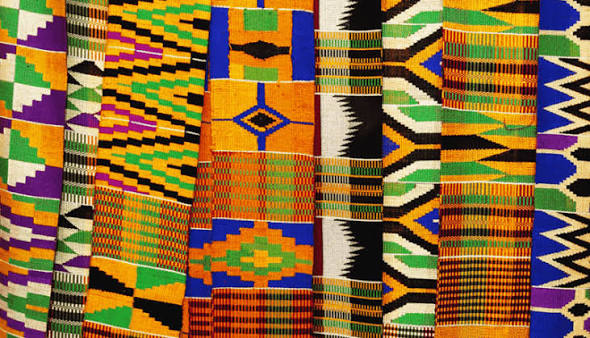
Kente is not just a fabric. It is a language. Most Ghanaians do not fully read it anymore. This article fixes that, pattern by pattern, thread by thread.
Kente Is Not Just a Fabric — Here Is What It Is Actually Saying
Every pattern has a name. Every name carries a meaning. A weaver does not just choose colours. They choose a message, sometimes drawn from a proverb, sometimes from a historic event, sometimes from a private moment of inspiration. Wearing kente without knowing this is like reading a book upside down. You still see the shape. You miss the story. And the story, more often than not, is the actual reason the cloth was made in the first place.
Names come from many places. A weaver might dream a pattern’s name during a quiet moment of contemplation. A chief might commission a cloth and name it himself, tying it to a personal achievement or a moral lesson. Some names reference historic battles. Some reference simple proverbs passed down for generations. This is why an older Ghanaian can look at a cloth and read an entire narrative most younger people, myself included at times, would simply see as beautiful colour. Names can even come from individuals in popular culture, proof that the tradition has never actually stood still, whatever the old, formal reputation of the cloth might suggest to an outsider.
Where Kente Comes From — The History Non-Ghanaians (and Some Ghanaians) Get Wrong
The most famous origin story comes from Bonwire, a town in the Ashanti Region. Two weavers, Ota Karaban and Kwaku Ameyaw, are said to have watched a spider named Ananse weave an intricate web in the moonlight. The spider taught them the technique. They brought it home to Bonwire and shared it with Asantehene Osei Tutu, the first ruler of the Asante kingdom. He adopted it as royal cloth. Bonwire became its centre.
The name itself comes from kenten, the Akan word for basket, a nod to the woven structure of the cloth. In Asante, kente is also called nwentoma, simply meaning woven cloth. It later carried the name gagamuga too, once it was elevated to royal status.
The craft did not appear from nothing, either. Strip weaving traditions in this part of West Africa stretch back roughly a thousand years, themselves rooted in a broader African weaving history going back thousands more. Kente is the most famous branch of that tree, not the whole tree itself. Both the Ashanti and the Ewe people celebrate this heritage with dedicated festivals, the Ashanti version centred on Bonwire, the Ewe version called Agbamevo, meaning loom-cloth, held in the Volta Region. Both festivals draw weavers, families, and visitors together each year to honour a craft that easily could have faded, and simply did not.
Ashanti Kente vs Ewe Kente — What Is the Actual Difference?
Both groups weave kente. Neither version is a copy of the other. Understanding the difference matters, especially if you are buying, gifting, or wearing a piece for a specific occasion tied to one heritage or the other.
Strip Weaving vs Block Weaving — Explained Visually
Ashanti kente is built from narrow woven strips, sewn together into a wider cloth. This technique has centred on Bonwire for centuries. Ewe kente, woven mainly around Agotime-Kpetoe in the Volta Region, developed its own patterns and techniques over the same long span of time. The strips look similar at a glance. The stories inside them differ.
A weaver alternates colours in both the warp, the vertical threads, and the weft, the horizontal ones, to build up a pattern. Some patterns run vertically. Some run horizontally. Some do both at once, which is where the most complex, most prized cloths come from. Every strip is narrow enough to weave on a hand loom, then joined with others into the finished piece you actually see worn. A single ceremonial cloth might combine a dozen or more individually woven strips, each contributing its own small piece of the larger design.
Color and Pattern Meanings — What Each Signals
Ashanti kente was historically tied tightly to royalty and rank. Only certain patterns could be worn by certain people. Ewe kente spread more broadly through the community. It was still tied to prestige and special occasions, but it was not locked to royal use in the same strict way. Ewe patterns lean more toward everyday life and proverbs than pure hierarchy.
Colour carries its own weight too, across both traditions. Gold tends to signal royalty and wealth. Deeper reds and blacks often carry weight tied to mourning or serious occasions. Bright, varied colour combinations tend to signal celebration. None of this is rigid law, but it is a real pattern worth knowing before you choose a cloth for a specific event.
What Different Kente Patterns Actually Mean
There are more than 350 recorded kente patterns. Each one has a name and a story attached to it, passed down through generations of weavers and their patrons. Learning even a handful of the most common ones changes how you see the fabric entirely.
The Royal Patterns and the Protocol Around Who Wears Them
Some patterns were historically reserved for kings alone. One famous example is “Emaa Da,” meaning “this one has no precedence.” According to the story, an Asante king was so struck by the pattern’s originality that he reserved it for his own use before it was later extended to people of high rank. Wearing a royal pattern without understanding its weight is a real misstep, one older Ghanaians will notice immediately even if they say nothing out loud.
Other patterns commemorate specific historical figures. One notable example honours a warrior queen mother, defeated in battle but remembered and celebrated for her courage through the cloth itself, generations after the actual event.
Patterns for Special Occasions vs Everyday Wear
Other patterns were built for weddings, funerals, festivals, and worship, each with a design chosen to suit the occasion’s meaning. A funeral cloth reads differently to a wedding cloth. Getting this wrong at a Ghanaian event is a real faux pas, not just a style choice.
Some patterns even honour a specific skill or achievement rather than an occasion at all. A weaver who created a genuinely original design might have it named for the exact moment of that achievement, celebrating creative ingenuity and originality directly through the cloth itself. That naming tradition is part of why kente carries such personal, specific weight, far beyond decoration.
How to Wear Kente in 2026
Rules differ depending on the setting. What works at a wedding does not necessarily work at your desk on a Tuesday, and knowing the difference is part of wearing kente well.
Traditional Occasions — The Rules
At a traditional wedding, a funeral, or a festival, follow your family’s guidance on pattern and colour. This is not the place for improvisation. Elders will notice, and the meaning matters more than the aesthetic in these settings. If you are unsure, ask before the day arrives, not after someone has already noticed the mismatch.
Modern Everyday Ways to Incorporate Kente Without Overdoing It
A small kente panel on a blazer collar. A kente-trimmed bag. A single accessory rather than a full cloth. Designers doing “Kente 2.0” this year are proving you do not need the full ceremonial wrap to honour the fabric. A little goes further than people expect, and it lets the cloth travel into ordinary, everyday moments without losing its meaning.
The Diaspora Guide — Wearing Kente Abroad and Doing It Right
Kente has become common at graduations and celebrations abroad. Wear it with real knowledge of what your specific pattern means, not just because it looks striking. Buy from a source that can tell you the pattern’s name and story. That knowledge is part of what you are actually wearing. A stole worn without any sense of its meaning is still just fabric. One worn with real understanding becomes a genuine connection to home, wherever you are standing when you put it on.
Where to Buy Authentic Kente in Ghana
Where you buy matters just as much as what you buy. Here is how to make sure what you take home is the real thing.
Bonwire — The Kente Capital and How to Visit
Bonwire sits about eighteen kilometres from Kumasi. You can watch weavers work the loom in person, buy directly from them, and see the strip-weaving process up close. It remains the most direct, most authentic place to buy. The village hosts its own Kente Festival too, a genuine celebration of the craft rather than a tourist performance staged for outsiders.
Kumasi Central Market and Accra Options
Kumasi Central Market carries a wide range of kente at varying quality levels. Accra has its own reputable sellers too, though prices there often run higher than buying closer to the source in Bonwire or Kumasi. A trip to Kumasi first, then Bonwire, gives you the full range of quality and price before you commit to a major purchase.
Trusted Online Sellers for Diaspora Buyers
Kente is officially recognised as a geographical indication of Ghana, a legal protection meant to safeguard its authenticity. Buy from sellers who can speak to a piece’s actual origin and weaver, not a generic import claiming to be handwoven. That legal protection exists precisely because imitation cloth, machine-printed and passed off as hand-woven, has become a real problem for buyers outside Ghana who cannot easily verify what they are getting.
Pricing Guide — What Real Kente Should Cost in 2026
A full, hand-woven ceremonial cloth from a skilled Bonwire weaver commands a genuinely premium price, reflecting real hours of labour. Smaller accessory pieces or strips cost far less. Machine-printed imitations sell cheap and should never be mistaken for the real, hand-woven thing. If a price feels too low for a full cloth, it probably is.
Weaving a large ceremonial cloth can take a skilled weaver weeks, sometimes longer for the most complex designs. That timeline is worth remembering when a price seems high. You are not just paying for fabric. You are paying for a genuine craft skill, passed down through actual apprenticeship, not a factory line.
Abena Xclusive’s Kente Buying Tips
Ask for the pattern’s name before you buy. Ask what it means. A real weaver or seller will know, and that knowledge is part of what you are paying for. Buy less, buy real, and let each piece actually mean something. That is the whole point of kente, and it always has been.
I think a lot of us, myself included, grew up seeing kente without ever really reading it. That is changing now, slowly, as more Ghanaians ask these questions before they buy. I would rather own one cloth whose story I actually know than five whose meaning I never bothered to learn. That is not a rule I am imposing on anyone else. It is simply the standard I now hold myself to, and I think it is worth passing on.