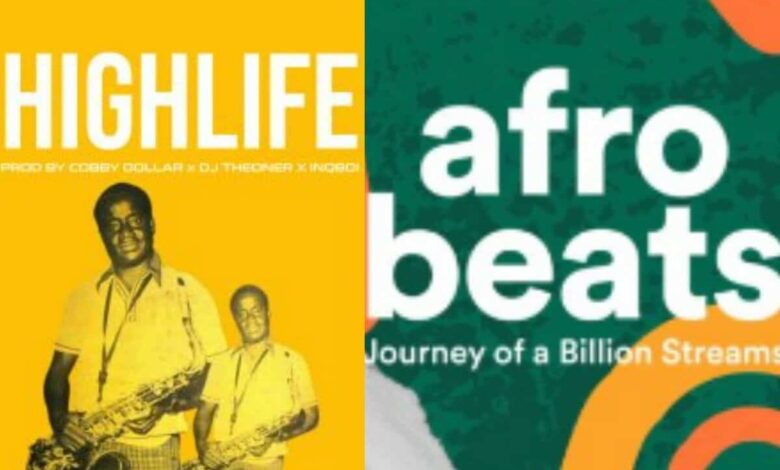
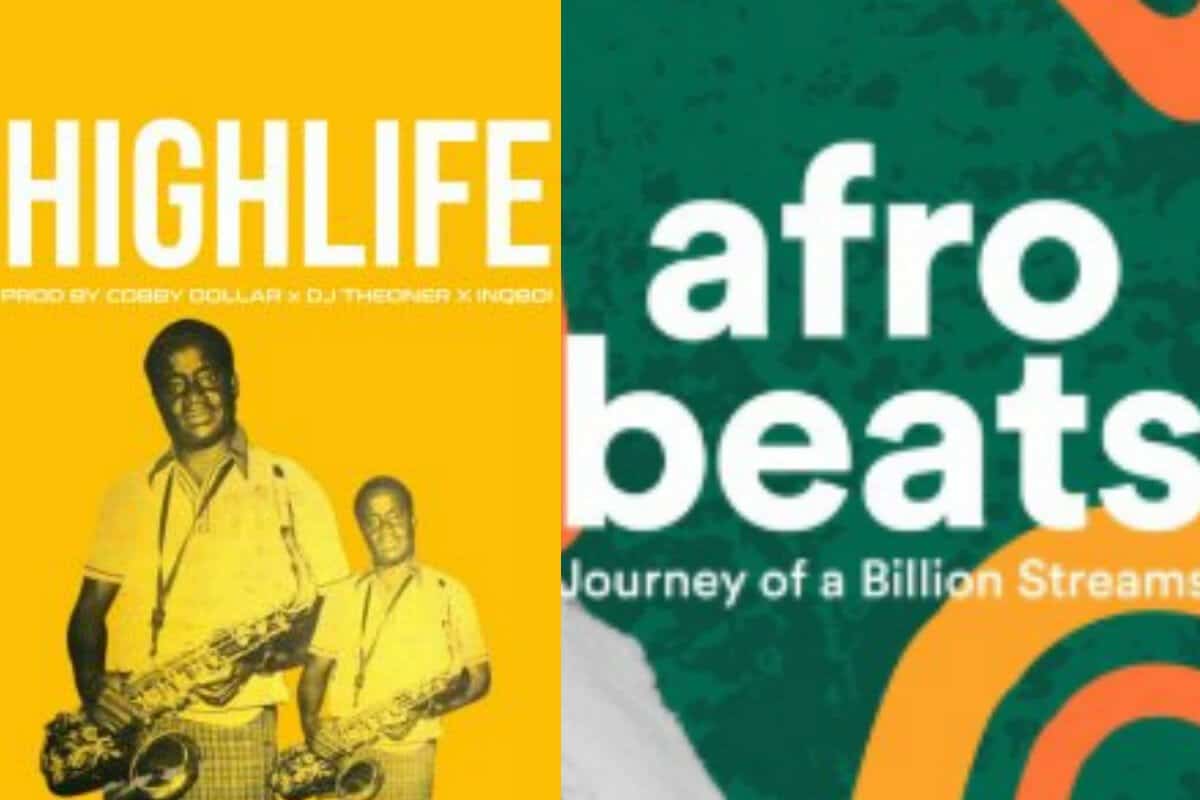
I grew up on two sounds at once. My uncles played highlife on Sunday afternoons, the guitars looping like a conversation that never quite ended. My generation grew up streaming Afrobeats on our phones, headphones in, algorithm picking the next song before we could.
For a long time I thought I had to choose one. I don’t think that anymore. This is the question I keep coming back to: did Afrobeats replace highlife, or did it just give highlife a new outfit to wear? I wrote this piece to answer that question properly, not just for myself, but for anyone else who has ever felt torn between the two.
The Highlife Foundation and Why It Still Matters
You cannot understand Ghanaian music without understanding highlife first. Everything that came after it, hiplife, Azonto, the Afrobeats wave, and even today’s drill scene, built its foundation on top of what highlife started.
Skip that history and you miss why our music sounds the way it does. It also matters for a more practical reason. When people outside Ghana talk about Afrobeats, they often talk about it as if it started in Lagos and nowhere else. That version of the story leaves Ghana out entirely, and it leaves out highlife specifically, even though the two are directly connected.
Where Highlife Came From and What It Carried
Highlife was born in Ghana in the early twentieth century, in the coastal clubs of Accra and Cape Coast. It took Akan and Ga melodies and fused them with the horns and guitars that sailors and colonial bands brought into the country.
The name itself came from ordinary people standing outside those clubs, unable to afford a ticket, listening to the “high life” happening inside.
Over time, the music moved out of the clubs and into everyday life. Became the sound of weddings, funerals, church, and the radio in the back of a taxi. It carried more than melody.
It carried identity, at a moment when Ghana was figuring out what it meant to be modern and still be itself.
Highlife also split into two distinct styles as it spread. Dance bands, popular in the cities, built big orchestras that echoed American brass bands and leaned into calypso and swing influences from abroad. Guitar bands, more common in rural areas, stripped things down to guitar and voice, closer to the blues in feeling if not in language.
Both versions carried the same emotional core. Both versions are still audible, if you know what to listen for, in the music being made in Accra studios today.
The Legends Who Built Ghana’s First Sound
No conversation about highlife happens without E.T. Mensah, still widely remembered as the King of Highlife, whose big band sound in the 1950s helped define the genre for the whole region and beyond.
His horn arrangements and dance-band energy set a template that Ghanaian musicians were still referencing decades later. Osibisa took that foundation and carried it to international stages, blending highlife with rock and jazz in a way that put Ghanaian music in front of audiences who had never heard it before, opening a door that a lot of today’s crossover artists are still walking through.
And later, Amakye Dede became one of the voices who kept highlife emotionally honest through decades of change, writing songs that dealt with real life, heartbreak, hardship, family, not just good times. These are not names you need to memorise for a quiz. They are the reason the music you hear today sounds like Ghana and not like anywhere else, whether the artist making it realises the debt or not.
How Afrobeats Arrived and What It Changed
Afrobeats did not appear out of nowhere, and it did not appear only in Nigeria, whatever the global narrative likes to suggest. But it did arrive as a genuinely new sound, and it changed how an entire generation of Ghanaians made and consumed music, whether or not they ever set foot in a studio themselves.
Nigeria’s Influence on Ghana’s Music Direction
Nigeria’s Afrobeats machine, bigger budgets, bigger streaming numbers, a much larger domestic audience, became impossible for Ghanaian artists to ignore. Producers here started building beats that could sit comfortably next to a Lagos record.
Some of that was pure commercial logic. If a Ghanaian artist wanted a Nigerian feature, or a Nigerian playlist placement, the production often had to speak that language first.
Some of it was genuine musical curiosity, artists here simply liking what they heard and wanting to try it themselves.
Either way, it pulled Ghanaian music toward a shared West African sound, for better and for worse, and it is a shift worth naming honestly rather than pretending it didn’t happen.
That pull has not been entirely one-directional, even if the global conversation often frames it that way. Ghanaian producers and songwriters have shaped records credited elsewhere for years, and this year’s renewed push to properly credit Ghana’s role in Afrobeats’ history, in interviews, in industry panels, in articles making exactly this argument, is really an attempt to correct a story that left Ghana’s fingerprints out of the picture.
What Afrobeats Added to Ghana’s DNA — and What It Replaced
Afrobeats brought sharper, more minimal production, and rhythms built for a global dance floor rather than a highlife dance hall.
It gave Ghanaian artists a lane to compete on streaming platforms built around a sound the whole world had already learned to love.
It also opened doors that highlife, for all its history, had struggled to open on its own, playlist placements, festival slots, features with artists who had never heard of Ghana before a single song reached them.
But something got quieter in the process. Live horns and guitar solos, the instruments that used to carry an entire highlife record, started showing up less. Some of that space got filled by synths and drum programming instead. That is not automatically a loss.
Production has always evolved, and highlife itself absorbed jazz, calypso, and Western dance styles a century ago without losing its identity. It is a trade, and 2026’s biggest artists are the ones figuring out how to make that trade work in their favour rather than losing something along the way.
The Artists Living in Both Worlds Right Now
The most interesting artists working today are not choosing a side. They are treating highlife and Afrobeats as two instruments in the same band.
Sarkodie’s Highlife Roots in His Rap
Sarkodie built his name in hip-hop, but highlife has never been far from his records. His hooks often lean on melodic, guitar-adjacent phrasing that owes more to highlife songwriting than to trap or drill.
His constant pull toward collaboration, this year alone pairing with Shatta Wale and King Paluta on very different records, echoes the way highlife bands always featured guest vocalists and horn players trading the spotlight.
He raps like a highlife singer thinks about melody, even when the beat underneath him is something else entirely.
KiDi and the New Highlife Repackaging
KiDi has spent his career finding ways to make highlife feel current without making it feel like a costume. His records lean on real melody and warm, romantic songwriting, the emotional core of classic highlife, even when the production around it sounds fully contemporary. He is proof that you do not need a live horn section to sound like you understand where the music came from.
Who Is Doing the Fusion Best in 2026
This year, Rcee has made the strongest case for a real highlife revival, building records like “Atiaa” around guitar-driven warmth while still sounding like an artist made for 2026 playlists, not a museum piece.
Black Sherif’s run this year, including “Top of the Morning” and “Find a Way,” carries a similar instinct, pairing highlife-leaning guitar tones with drums that belong to right now.
Both artists prove the same point from different directions: the fusion works best when it does not announce itself. It just sounds like Ghana.
What Ghana’s Sound Looks Like in 2026 — Is There a Third Genre Forming?
I think something new is quietly forming, and nobody has agreed on a name for it yet. It borrows highlife’s melody and emotional honesty, Afrobeats’ rhythm and production polish, and a willingness to sample from hiplife and Azonto along the way.
Industry conversations this year have started pushing back hard against the idea that Afrobeats is simply a Nigerian export, arguing instead that Ghana’s own highlife-to-hiplife-to-Azonto lineage directly seeded the sound the world now calls Afrobeats.
Whether or not that argument wins internationally, it matters here, because it changes how our own artists understand what they are building.
This is not a genre in crisis, torn between two identities. It is a genre in the middle of writing its own next chapter, and I would rather Ghana write that chapter with confidence than spend it arguing about who owns which piece of the sound. The artists doing this well right now are not waiting for permission from anyone outside the country. They are just making the music that feels true to them, and letting the label come later, if it comes at all.
Abena Xclusive’s Take on Where It Goes Next
I do not think highlife is dying, and I do not think Afrobeats is a threat to it. I think the artists who understand both, Rcee, Black Sherif, KiDi, Sarkodie, each in their own way, are the ones who will define what Ghanaian music sounds like five years from now.
The ones who ignore highlife entirely will end up sounding like everyone else on the continent. The ones who lean on it too hard, without updating anything, will end up sounding like a tribute act instead of an artist. The sweet spot is narrow, and that is exactly why the artists finding it deserve real credit.
My honest hope is simple. I want my nephews and nieces to grow up the way I did, hearing a guitar line their grandparents would recognise, wrapped around a beat built for right now.
That is not a compromise. That is just what Ghana has always sounded like, if you actually listen.
Highlife was never a museum piece waiting to be preserved. It was always meant to keep moving, keep absorbing, keep becoming something new while staying recognisably itself. Afrobeats is not the end of that story. It is just the latest chapter in a story that started a hundred years ago and is nowhere close to finished.