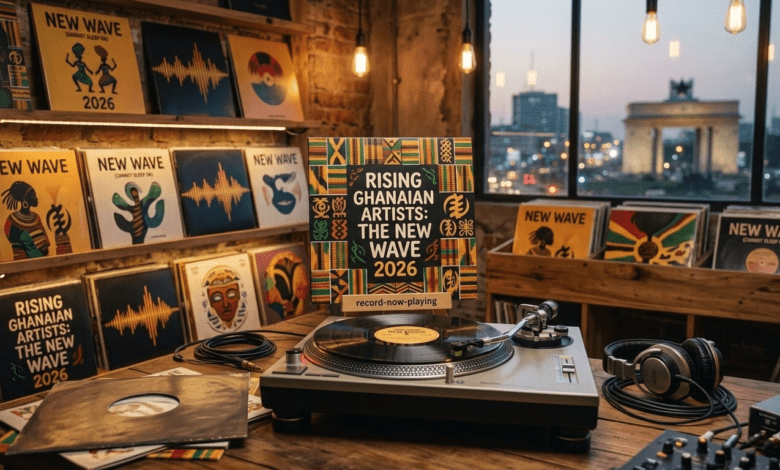
Every year I make this list, and every year someone tells me I got it wrong. Good. That means people care. It means you are paying close enough attention to argue with me, and that is exactly what a list like this should do.
This year’s class feels different to me, though. Not louder. More sure of itself. These are artists who grew up watching Sarkodie and Stonebwoy become legends. They are not trying to copy that path. They watched how it was built, and now they are building their own version, on their own terms. Here is who I am watching this year, and why each one earned a place on this list.
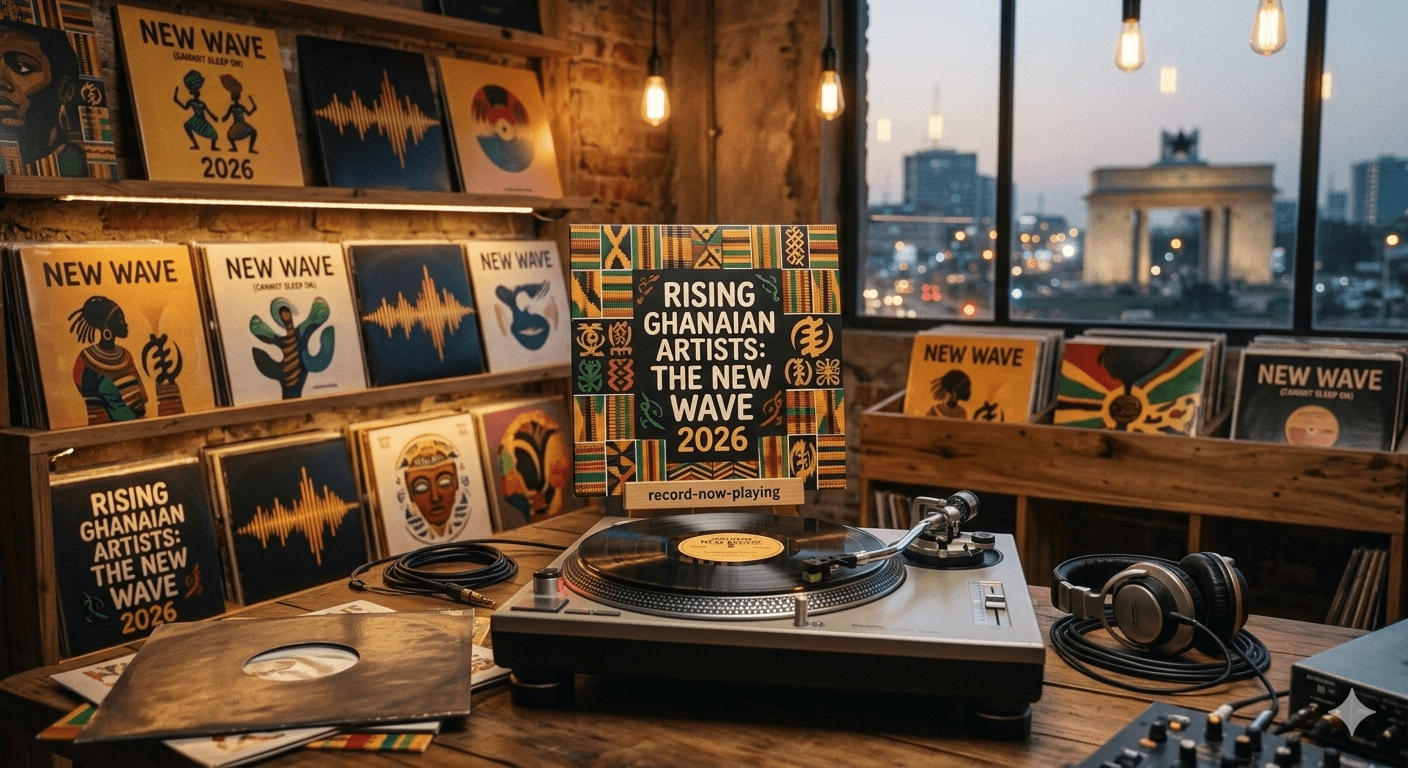
Why the 2026 Ghana Music Class Feels Different
Ghana’s newest artists are not waiting for a major label to open a door. They are building audiences first, on TikTok and Audiomack, then letting the industry catch up to them. That order used to be reversed. A decade ago, you needed a deal before you had a real audience. Now the audience often arrives first, and the deal follows because of it.
Many of these artists are also pulling from places the older generation rarely touched. Northern Ghanaian rhythms. Alte and indie influences. Neo-soul. The result is a scene that sounds less like one genre and more like ten small movements happening at once, all under the same flag. That is a good problem to have, and it is one reason this list was harder to narrow down than usual.
It also means old labels like “the next big thing” fit less neatly than they used to. This is not one artist waiting to inherit a throne. It is a wide, uneven, exciting spread of people making very different music at the same time, in the same country, in the same year. That is worth celebrating on its own, before a single one of them becomes a household name.
The Artists to Watch — Profiles
AratheJay — The Sound, the Story, the One Song to Start With
AratheJay released his debut album, The Odyssey, in 2025, and it quickly became one of the most talked-about Ghanaian projects of the year. He has already shared the mic with Black Sherif, and his shows at Nimo Live have sold out. What makes him stand out is patience. He is not rushing a hit. He is building a body of work, song by song, the way an album artist does rather than a singles artist. That approach is rare in a scene built on quick viral moments, and it is exactly why serious listeners keep circling back to him. Start with The Odyssey front to back, not a single track — it was made to be heard as a whole story.
Jubed — What Makes Him Different From Everyone Trying the Same Thing
Jubed is from Kumasi, and he brought northern Ghanaian energy into the mainstream with his 2025 viral hit “Ruwa.” The song sparked dance challenges across the country, then earned him public co-signs from Sarkodie and Nana Ama McBrown — the kind of endorsement most new artists wait years for. A remix followed, featuring Yemi Alade, Oxlade, and Prince MK Baagi, pulling in listeners from well outside Ghana’s borders. Jubed’s storytelling is rooted in a part of Ghana that rarely gets this kind of national spotlight, and that is exactly why he matters right now. He is not just a hit song. He is a door opening for a whole region’s sound.
Rcee — The One Everyone Will Know By December
Rcee is doing something few young artists attempt: reinventing highlife for a generation raised entirely on Afrobeats. His 2025 project, How Did We Get Here, earned praise from Amaarae and attention from a Recording Academy manager, which is not a small thing for an independent Ghanaian artist. Songs like “Atiaa” and “Knees and Bend” prove he can sound modern without losing the guitar-driven warmth highlife has always been known for. If Ghana’s sound keeps circling back to its roots the way it has this year, Rcee is positioned to lead that return, not just follow it.
Mellissa — Quick-Fire Profile
Mellissa is Moliy’s sister, and she is building her own lane fast, not riding her sibling’s wave. Her singles “Good Boy,” featuring Joey B and Moliy, and “Tattoo,” featuring Blaqbonez, both landed on Apple Music’s Africa Rising playlist. She calls her sound Afro-sexy, and it is confident, sultry, and unmistakably hers. Expect a bigger breakthrough record from her before the year is out.
Gonaboy — Quick-Fire Profile
Gonaboy blends street rap with reggae and drill, a combination that should not work as well as it does. His 2025 single “Same Timbs” peaked at No. 2 on Ghana’s Shazam chart and stayed there for over 100 days, a genuinely rare run. He was also featured in Shazam’s Fast Forward 2026 list. Follow-up tracks “Abele” and “Hustlers Mantra” show he is not a one-song story.
Annabel Rose — Quick-Fire Profile
Annabel Rose’s debut EP, Something About A Rose, landed on Apple Music’s global and Africa Rising playlists in 2025. Amaarae has publicly backed her, which carries real weight in this scene. Her alt-pop sound and gender-fluid creative vision make her one of the boldest artists on this list, and one of the least predictable in the best possible way.
King Paluta — Quick-Fire Profile
King Paluta won Most Popular Song at the 2025 Telecel Ghana Music Awards, and 2026 has seen him move from viral street hitmaker to something closer to an industry architect. His feature on Sarkodie’s “Give Up And See” this year is proof of how far his reputation has traveled in a short time.
Okese1 — Quick-Fire Profile
Okese1 leads Kumasi’s Amotia Gang, and he opened the 2026 summer season with “Party Day,” featuring King Paluta. He is shifting from aggressive street drill toward more melodic, globally accessible records, a deliberate move that suggests he is chasing a much bigger audience next, and knows exactly how to get there.
Also Worth Your Ears
Two more names deserve a mention, even if they have not broken through as widely yet. S3kyerewaa, from Takoradi in the Western Region, is an emerging neo-soul and afro-soul singer-songwriter building a following on soulful vocals and introspective lyrics — a real change of pace from the high-energy sound dominating most of this list. Fad Lan, from Northern Ghana, is gaining significant attention of his own, and joins Jubed in proving that the north has a real seat at the table in 2026, not just a guest appearance.
What These Artists Have in Common
None of them waited for permission. Every name on this list built a real audience before a major deal arrived, using TikTok, Audiomack, and word of mouth instead of a label’s marketing budget. That is a big shift from how Ghana’s music industry used to work, when a deal was often the starting point rather than the reward.
Most of them also collaborate constantly, trading features with each other and with established stars. That habit spreads their reach faster than any single release could on its own, because every feature introduces them to a whole new set of ears that might never have found them otherwise. And almost none of them sound like a copy of someone bigger. That is the real shift happening right now. This generation is not trying to be the next Sarkodie or the next Stonebwoy. They are trying to be the first version of themselves, and audiences can tell the difference.
There is also a confidence running through this whole class that feels new. None of them sound like they are apologising for where they are from, or softening their sound to travel better outside Ghana. If anything, the opposite is true. The more specifically Ghanaian they sound, the further their music seems to travel this year — which might be the biggest lesson of 2026 so far.
How to Support Ghana’s New Wave Without Spending Money
Follow, Stream, Share and Why It Actually Matters
Streaming numbers and follower counts decide who gets booked, who gets a feature, and who gets label attention. Every stream counts, even the small ones. Every share puts a song in front of someone who has never heard it before, and that is often how a track finds its way from one city to the next. You do not need money to help an artist grow. You need five minutes and a playlist.
Where to Find Their Music Before It Hits Mainstream
Audiomack is usually first, since most Ghanaian artists upload there before anywhere else. TikTok is where a song usually catches fire, often months before radio picks it up and starts playing it on a loop. Spotify’s Africa Rising and Ghana-focused playlists are worth following closely too, since that is where a lot of this list already lives, quietly building numbers before the rest of the country notices.
Abena Xclusive’s Prediction for the Year-End Breakout
If I had to bet on one name from this list to have the biggest final quarter of the year, I would put my money on Jubed. Northern Ghana has been underrepresented in the mainstream for too long, and “Ruwa” already proved the audience is there and hungry for more. He has the co-signs, he has the sound, and he has a whole region rooting for him. Watch this space closely. I plan to be right, and I would rather be wrong out loud than quietly play it safe.