All you need to know about the 10 big changes that could transform the 1992 Constitution

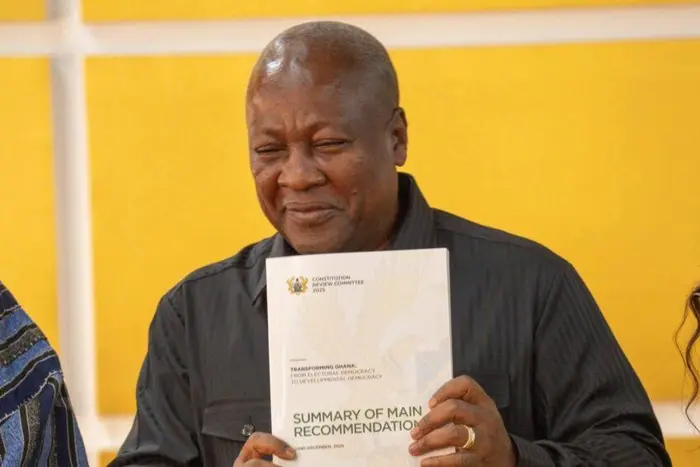
Ghana could soon witness one of the biggest constitutional reforms in its history following the government’s acceptance of several major recommendations submitted by the Constitutional Review Committee. If these proposals successfully go through the constitutional amendment process and receive the necessary approvals, they will introduce significant changes to how the country is governed under the 1992 Constitution.
The reforms are contained in the government’s White Paper, which was presented by the Attorney General and Minister for Justice, Dr Dominic Ayine. According to the government, the proposed amendments are intended to modernise Ghana’s democratic system, improve accountability in public office, strengthen key state institutions and make governance more responsive to the needs of citizens.
The recommendations affect almost every important part of government. They include proposed changes to the Presidency, Parliament, the Judiciary, political parties, local government administration and Ghana’s electoral system.
Among the most notable proposals are extending the terms of office for both the President and Members of Parliament from four years to five years, lowering the minimum age required to contest for the presidency, limiting the number of ministers that can be appointed by a President, requiring the President to pay taxes on salary and allowances, and introducing the election of all Metropolitan, Municipal and District Chief Executives instead of appointing them.
The government has also accepted proposals aimed at strengthening democracy within political parties, expanding opportunities for some Ghanaians with dual citizenship to hold public office, reforming the country’s highest courts and setting strict constitutional timelines for resolving presidential election disputes.
If eventually approved through the required constitutional processes, these reforms could reshape Ghana’s political landscape for many years to come.
Presidential and Parliamentary Terms Could Increase to Five Years
One of the biggest proposals accepted by the government is the extension of the terms of office for both the President and Members of Parliament.
Under the current Constitution, both the President and Parliament serve four-year terms before new elections are held. The proposed amendment seeks to increase these terms to five years.
According to the government, the additional year would provide elected leaders with more time to develop policies, implement development programmes and assess the effectiveness of their initiatives before returning to the electorate.
Supporters of the proposal argue that frequent election cycles sometimes interrupt long-term national development plans. Extending the term to five years could reduce the pressure of continuous campaigning and allow governments to focus more on delivering their promises.
If approved, both presidential and parliamentary elections would continue to be held together under the new five-year cycle.
Younger Ghanaians Could Become Eligible to Contest for President
The government has also endorsed changes to the minimum age requirement for anyone seeking to become President of Ghana.
Currently, a presidential candidate must be at least 40 years old before contesting the office.
Under the new proposal, that minimum age would be reduced to 35 years.
Although the Constitutional Review Committee originally recommended reducing the age to 30 years, the government decided that 35 years would provide a better balance between encouraging youth participation and ensuring that presidential candidates possess adequate maturity and leadership experience.
If adopted, the change would allow more young Ghanaians to aspire to the country’s highest political office while maintaining what the government considers an appropriate level of experience.
New Timelines for Presidential Elections and Election Petitions
The government also wants to reform the timetable governing presidential elections and the handling of election disputes.
Under the proposal, presidential elections would be held during the first week of November instead of the current schedule. The exact date would be determined by the Electoral Commission through a constitutional instrument.
The reforms also seek to ensure that election-related disputes are resolved much more quickly than in the past.
Any presidential election petition would have to be filed within 14 days after the declaration of election results.
The Supreme Court would then be constitutionally required to determine and conclude the petition within 30 days.
In addition, the Electoral Commission would be required to provide all relevant election materials and data to both the courts and the parties involved in any election dispute.
Supporters believe these timelines would help reduce prolonged political uncertainty after elections and strengthen public confidence in Ghana’s democratic process.
President Could Begin Paying Taxes Like Other Citizens
One proposal that has attracted significant public attention is the recommendation to remove the President’s tax exemption.
If approved, the President of Ghana would be required to pay taxes on salary, official allowances and applicable indirect taxes on goods and services just like many other citizens.
However, the proposal maintains that presidential retirement gratuity and pension benefits would continue to remain exempt from taxation.
Supporters argue that this reform promotes fairness and demonstrates that the country’s highest public office is also subject to the same tax obligations expected of ordinary citizens.
The proposal is also intended to strengthen public confidence in government accountability and transparency.
Future Presidents Could Be Limited to 60 Ministers
Another major recommendation seeks to place a constitutional limit on the number of ministers any President can appoint.
If the amendment becomes law, no President would be permitted to appoint more than 60 ministers.
The Constitution would continue to allow ministers to be selected either from Parliament or from outside Parliament.
Many observers have long argued that Ghana’s ministerial appointments have become too large, increasing government expenditure and administrative costs.
Supporters of the proposed limit believe a smaller ministerial team would improve efficiency while reducing public spending.
Parliament Could Be Capped at 300 Members
The government has also accepted proposals affecting the size and composition of Parliament.
Under the recommendation, Parliament would have a constitutional maximum of 300 members.
The current 276 constituency seats would remain unchanged.
However, an additional 24 seats would be introduced through a proportional representation system.
These reserved seats would be allocated to improve representation for women, persons with disabilities and young people.
The proposal is intended to create a Parliament that better reflects Ghana’s diverse population while encouraging wider participation in national decision-making.
Supporters believe increasing opportunities for traditionally underrepresented groups could strengthen democracy and improve policy discussions.
Dual Citizens Could Gain Greater Access to Public Office
The constitutional reforms also include important proposals affecting Ghanaians who hold dual citizenship.
If approved, Ghanaians by birth who possess dual citizenship would no longer be required to renounce their second nationality before contesting parliamentary elections.
In addition, dual citizens would become eligible for several important constitutional offices that are currently restricted.
These offices include the Chief Justice, the Chairperson of the Electoral Commission and the Speaker of Parliament.
However, the government has decided to retain the restriction preventing dual citizens from becoming President or Vice President of Ghana.
Supporters argue that many highly skilled Ghanaians living abroad possess valuable experience that could benefit national development if given greater opportunities to serve.
Judiciary Reforms Aim to Improve Stability
Significant changes have also been proposed for Ghana’s judiciary.
Under the reforms, the Chief Justice would serve a single non-renewable term of 10 years, provided the mandatory retirement age is not reached earlier.
The proposal seeks to promote judicial independence by removing concerns about reappointment.
The government has also accepted a recommendation to place a constitutional limit on the number of Supreme Court justices.
If approved, the Supreme Court would consist of a maximum of 19 members, including the Chief Justice and 18 Supreme Court Justices.
Supporters believe these reforms could improve consistency within the country’s highest court while maintaining an effective balance in judicial appointments.
Political Parties Could Face Stronger Democratic Rules
The government has also endorsed proposals designed to strengthen democracy within political parties.
Registered political parties would be required to ensure that all members in good standing enjoy equal voting rights when selecting presidential and parliamentary candidates.
The reforms also propose the establishment of a Political Parties Regulatory Commission.
The new commission would be responsible for registering and regulating political parties across the country.
Its responsibilities would include overseeing campaign financing, monitoring compliance with political party regulations and administering the proposed Democracy Fund.
The government believes these reforms could improve transparency, strengthen internal democracy and promote greater public confidence in Ghana’s political system.
District Chief Executives Could Be Elected by the People
Perhaps one of the most significant local government reforms is the proposal to elect all Metropolitan, Municipal and District Chief Executives.
For many years, there has been public debate about whether District Chief Executives should continue to be appointed by the President or elected directly by citizens.
The government has now accepted the recommendation that all MMDCEs should be elected.
Under the proposed system, the President would nominate five candidates, including at least two women.
After a vetting process, three candidates, including at least one woman, would be shortlisted to contest the election.
Supporters believe this process would improve accountability because elected MMDCEs would answer directly to the people they serve rather than relying solely on presidential appointment.
What Happens Next?
Although the government has accepted these recommendations in its White Paper, the proposals have not yet become law.
Many of the suggested reforms involve constitutional amendments, meaning they must pass through the legal procedures required under Ghana’s Constitution before they can take effect.
Some amendments may require approval by Parliament, while others could require a national referendum depending on the constitutional provisions involved.
If eventually approved, these reforms would represent one of the most comprehensive updates to Ghana’s 1992 Constitution since it came into force more than three decades ago.
The proposals seek to modernise governance, strengthen democratic institutions, improve accountability and create a political system that reflects the changing needs of Ghana’s growing democracy. Whether every recommendation is ultimately adopted remains to be seen, but the government’s acceptance of these proposals marks an important step in what could become a historic constitutional reform process.